EPJ Plus Highlight - Painting materials in San Salvatore crypt, Italy, confirmed to be from the Lombard Period
- Details
- Published on 11 December 2024
Complemeting PIXE spectroscopy with two further techniques, electron microscopy and Raman spectroscopy, plus infrared photography has allowed a full characterisation of the pigments making up these important medieval paintings.
The eighth-century church and crypt of San Salvatore in Brescia, Italy is one of the most important pieces of Early Medieval religious architecture in that country, if not in Europe as a whole. The crypt is known for its remarkable wall paintings. The pigments used in these were analysed about twenty years ago using a non-destructive technique, PIXE (Particle-Induced X-ray Emission Spectroscopy), but the results were largely inconclusive. An international group of scientists led by Alessandro Zucchiatti of the University of the Witwatersrand, Johannesburg, South Africa and the University of Genoa, Italy has now performed a much more detailed analysis of these pigments, leading to important insights into their nature. This work is now published in EPJ Plus.
EPJ Plus Highlight - Modelling antineutrinos emitted from nuclear reactors during fission
- Details
- Published on 10 December 2024
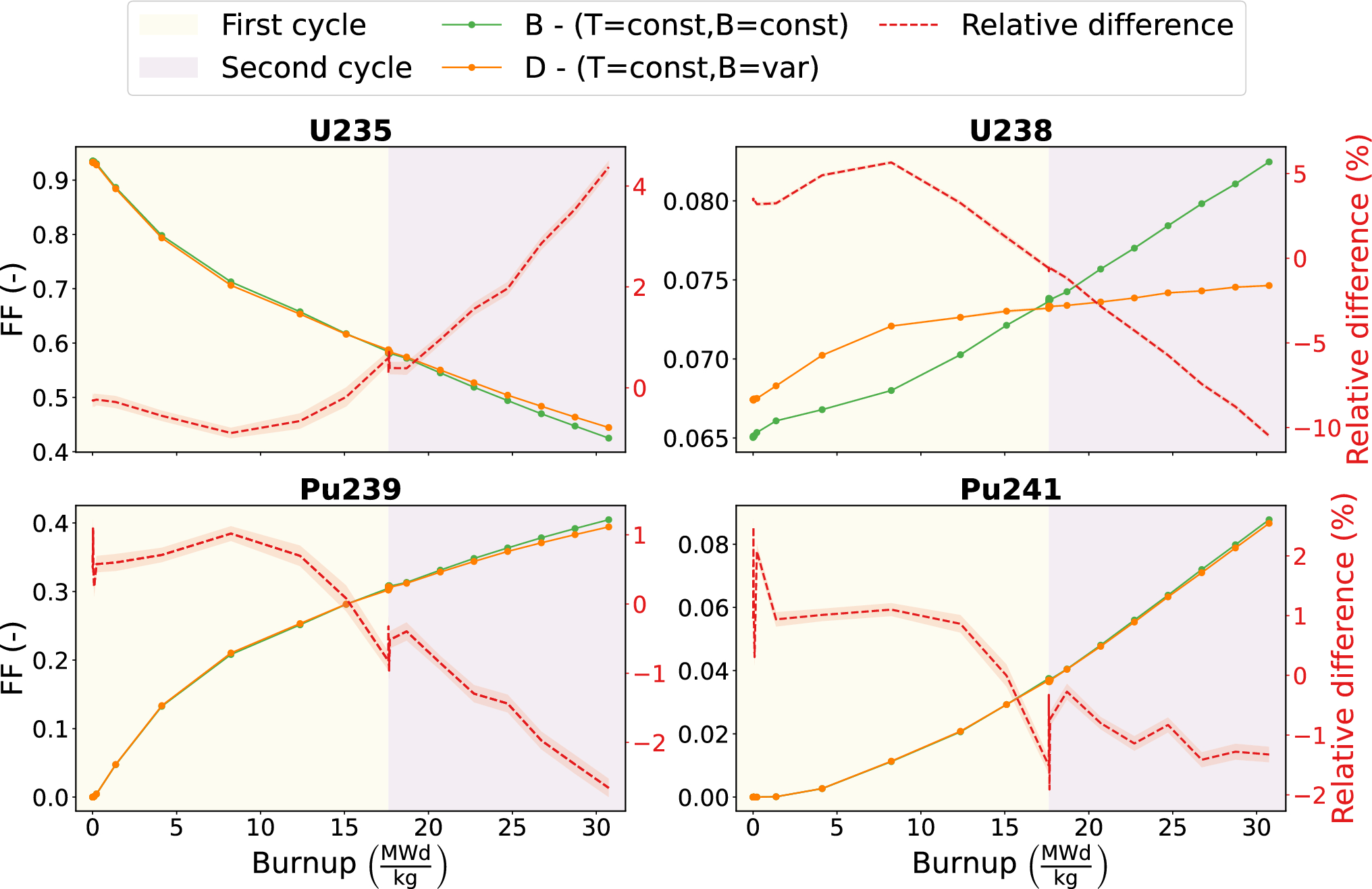
Nuclear fission is the most reliable source of antineutrinos, but they are difficult to characterise. A new study suggests how their emission can be simulated most effectively.
Antineutrinos are mysterious fundamental anti-particles with no charge and an exceptionally small but non-zero mass. The JUNO project (Jiangmen Underground Neutrino Observatory) in China is a large scintillation detector designed to detect them and to characterise their properties, particularly in precise measurements of that tiny mass. Anti-particles are hard to measure and even harder to control, even when they come from a strong and reliable source.
A group of Italian physicists, led by Monica Sisti of the Istituto Nazionale di Fisica Nucleare (INFN) in Milan and Antonio Cammi of the Politecnico di Milano and part of the JUNO collaboration of over 700 scientists from 17 countries, has now modelled parameters that determine the ‘antineutrino spectrum’ emitted by a source. Their results are published in the journal EPJ Plus.
EPJ Plus Highlight - Assessing the place of citizen science in modern research
- Details
- Published on 24 June 2024
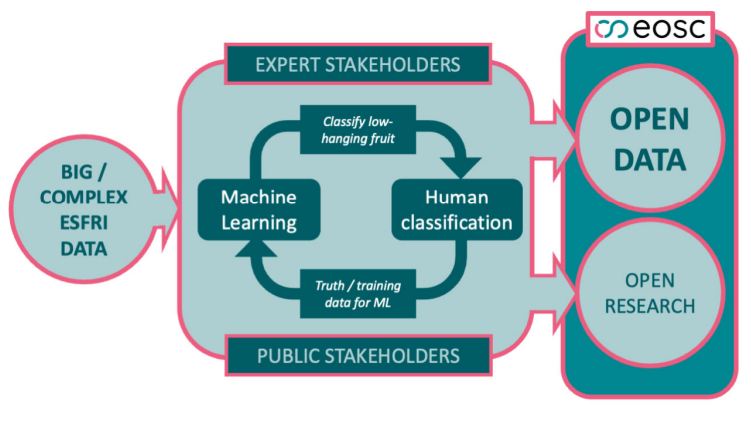
New analysis presents recommendations for EU-funded research projects on how citizen science can be deployed to ensure the best possible outcomes for both research and public engagement.
In recent years, numerous fields of research have seen an explosion in the volume and complexity of their scientific data. To keep pace with these changes, EU-funded research projects are increasingly crowdsourcing their data through citizen science projects, which allow the public to engage directly with their research.
Through a detailed analysis published in EPJ Plus, Stephen Serjeant and colleagues at The Open University present new recommendations for how citizen science should be deployed to ensure the best possible outcome for research. The team’s insights could help researchers to better understand the potential impacts of this new way of doing science.
EPJ Plus expands and refines scope of geophysics section to become Earth System Physics
- Details
- Published on 07 June 2024
EPJ Plus has both expanded and refined the scope of its geophysics section to become Earth System Physics, which is encompassing all topics and methodologies that view the rapidly growing field of Earth System Science through the lens of physics. The aim is to offer a platform for discussing fresh perspectives and understanding of the dynamics and scales connecting geosphere, hydrosphere, atmosphere, and biosphere and the forming of environments and climates. At the same time the new scope wishes to recognize and foster the transformative potential of deep learning in the field - the connections between data scientists and geoscientist are still developing, and physically-informed AI represents not just an evolution in methodology but a paradigm shift in how to conceptualize and engage with Earth System Science.
For more information please read the Editorial by Antonio Navarra, the Managing Editor of this section.
EPJ Plus Highlight - A guide for early-career researchers in computational science
- Details
- Published on 03 May 2024
A new article offers a valuable guide for new graduate students starting out their careers in computational science.
In recent years, a growing number of students have embraced scientific computation as an integral component of their graduate research. Yet since many of them are new to the field, they often have little to no coding experience, or any prior knowledge of computational tools. For many students starting out in the field, this can seem daunting, and leaves them unsure of where to start.
In a new article published in EPJ Plus, a team led by Idil Ismail, a current graduate student at the University of Warwick, UK, present an introductory guide to the field for researchers embarking on new careers. The team's work will help new graduate students to navigate the complexities of scientific computation science as they begin their journey in computational science research and could ultimately help the wider field to become more transparent and inclusive.
EPJ Plus Highlight - Describing growing tissues in the language of thermodynamics
- Details
- Published on 17 April 2024
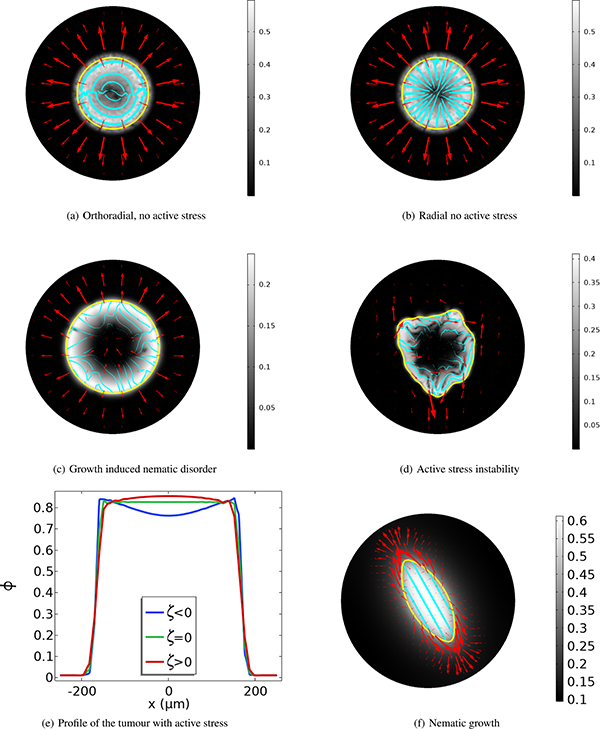
New analysis shows how key properties of biological tissues can be accurately described in the mathematical language of Onsager’s variational principle, widely used to describe continually changing systems in thermodynamics.
A key feature of biological tissues is their inhomogeneity and their ability to grow via cell reproduction. To study this behaviour, it is important to describe it using equations, which account for factors including growth rates, chemical signalling, and tissue structure.
In doing this, researchers aim to develop consistent continuous descriptions of these deeply complex systems: accurately predicting properties such as cell reproduction rates, disorder, and how their growth varies in different space directions, depending on their interactions.
Through new analysis published in EPJ Plus, Joseph Ackermann and Martine Ben Amar at Sorbonne University Paris, show that tissue development can be reliably captured within ‘Onsager’s variational principle’: a mathematical framework used widely in thermodynamics.
Focus Point on Physics in the Balkans: Perspectives and Challenges
- Details
- Published on 05 April 2024
Guest editors: Luc Bergé, Goran S. Djordjević and Zoran V. Popović
One specificity of physics in the Balkans is the existence of a tradition, more than 30 years long, of organizing triennial Balkan congresses (International General Physics Conferences) within the Balkan Union of Physicists (BPU) as a platform for the presentation of the research results of hundreds of participants and their collaborators with the Balkans, from Europe and the world.
The aim of this Focus point of EPJ Plus is to contribute to an overview of the state of the art of research in physics in the Balkans. Eleven of the seventeen plenary and invited lecturers at the BPU11 Congress contributed to this issue. The Focus Point provides valuable insights and highlights results in already established areas, as well as some interesting new research avenues to pursue. This issue contains mainly original scientific papers with review elements in the fields of Solid State Physics, Physics of Materials, Econophysics, Quantum Optics and Laser Physics, Open Quantum Systems, Cosmic Rays and Hubble Tension in Cosmology, Nuclear and Collider Physics.
All articles are freely accessible until 31 May 2024. For further information, read the Editorial.
EPJ Plus Highlight - Beam balance designs could elucidate the origins of dark energy
- Details
- Published on 05 March 2024
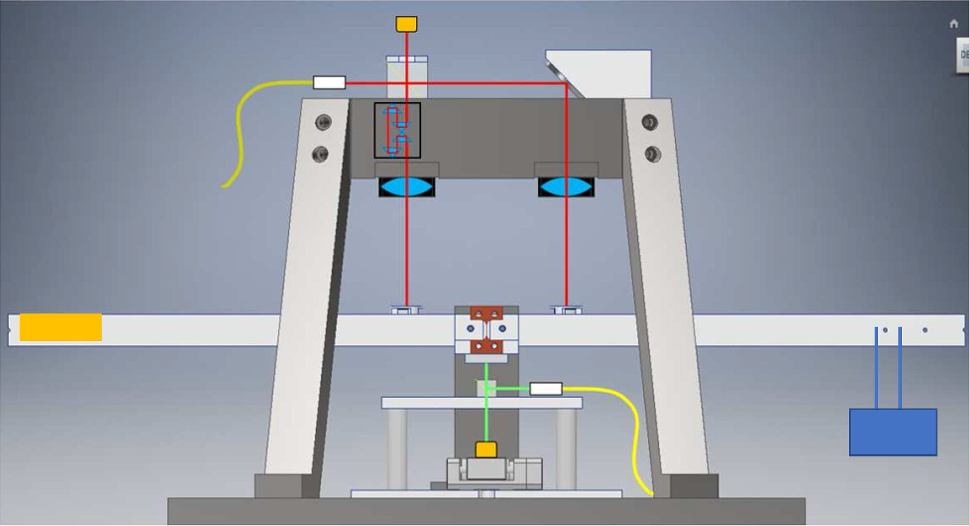
With some improvements, the instrument could help physicists to identify the mysterious origins of dark energy.
One of the greatest problems in modern physics is to reconcile the enormous difference between the energy carried by random fluctuations in the vacuum of space, and the dark energy driving the universe’s expansion.
Through new research published in EPJ Plus, researchers led by Enrico Calloni at the University of Naples Federico II, Italy, have unveiled a prototype for an ultra-precise beam balance instrument, which they hope could be used to measure the interaction between these vacuum fluctuations and gravitational fields. With some further improvements, the instrument could eventually enable researchers to shed new light on the enigmatic origins of dark energy.
EPJ Plus Highlight - Unlocking the full potential of Auger electron spectroscopy
- Details
- Published on 13 February 2024
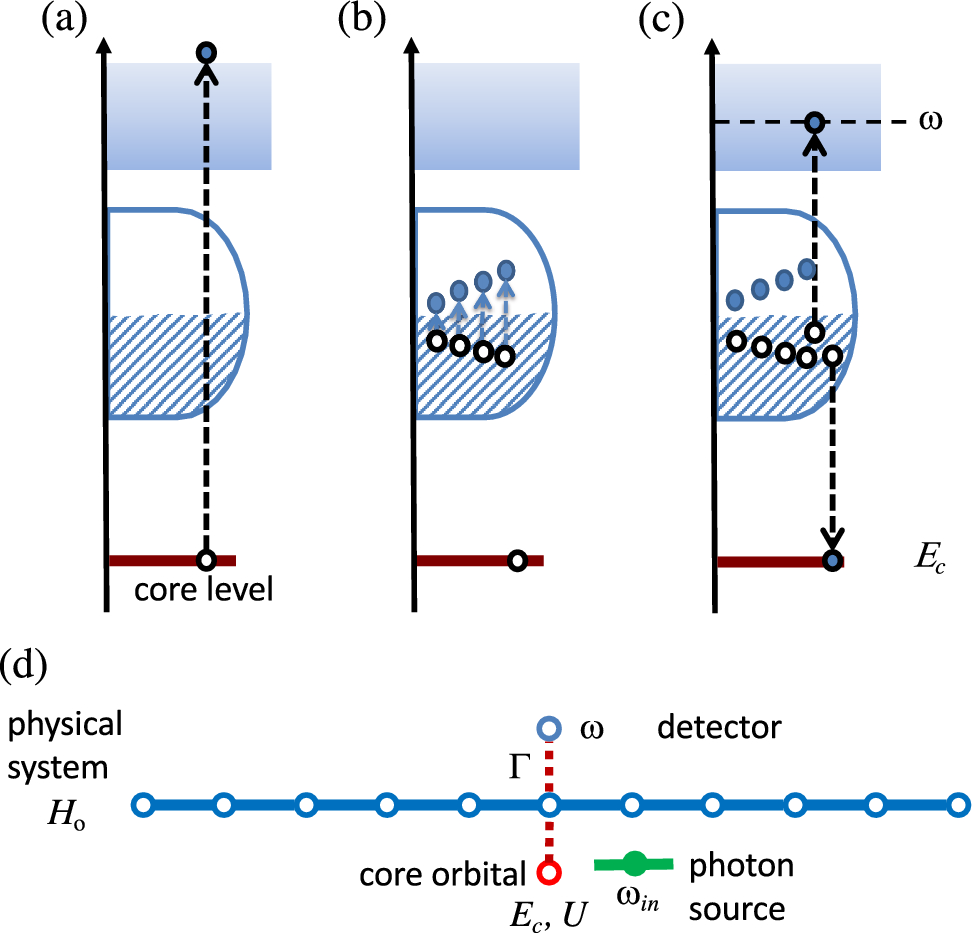
A new computational approach makes more realistic assumptions about the redistribution of energy during the Auger process, improving the accuracy of Auger electron spectroscopy.
Auger electron spectroscopy (AES) is an incredibly useful technique for probing material samples – but current assumptions about the process ignore some of the key time-dependent effects it involves. So far, this has resulted in overly-simplified calculations, which have ultimately prevented the technique from reaching its full potential.
Through a new study published in EPJ Plus, Alberto Noccera at the University of British Columbia, Canada, together with Adrian Feiguin at Northeastern University, United States, developed a new computational approach which offers a more precise theoretical description of the AES process, while taking its time dependence into account. Their method could help researchers to improve their quality of material analysis across a wide array of fields: including chemistry, environmental science, and microelectronics.
EPJ Plus Highlight - Better calculations for the magnetic properties of neodymium compounds
- Details
- Published on 06 December 2023
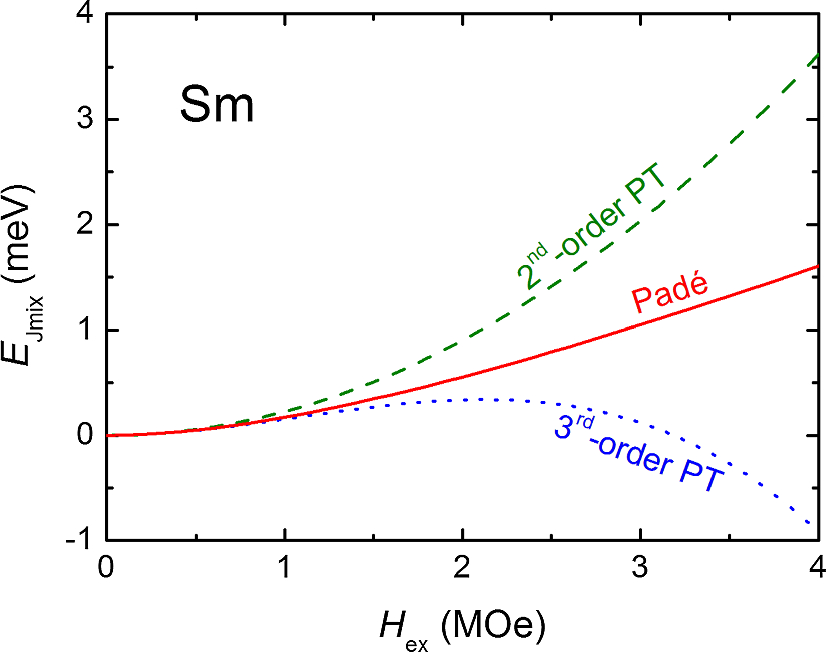
Valuable magnetic properties of neodymium compounds have so far remained difficult to probe using high-energy neutron spectroscopy. A new correction to the technique could make these measurements far more feasible.
High-energy neutron scattering is a powerful tool in spectroscopy, allowing researchers to probe the physical and chemical properties of many different materials. It is especially well suited for studying the dense and complex structures of lanthanide-iron intermetallic compounds, such as the celebrated Nd2Fe14B. So far, however, researchers still haven’t figured out how to probe the material’s valuable magnetic properties using neutron scattering. In a new study published in EPJ Plus, Michael Kuz’min at Aix-Marseille University, together with Manuel Richter at Leibniz IFW Dresden, present a correction to the technique which could be used to determine the ‘exchange field’ of Nd: an important indicator of its magnetic properties.